The RELAW (Revitalizing Indigenous Law for Land, Air and Water) team was humbled to receive an overwhelming number of applications from brilliant hearts and minds to join our 2025-26 Co-learning Program. Selecting this year’s participants was not an easy task, as each applicant had a unique set of skills and experiences to bring to the group.
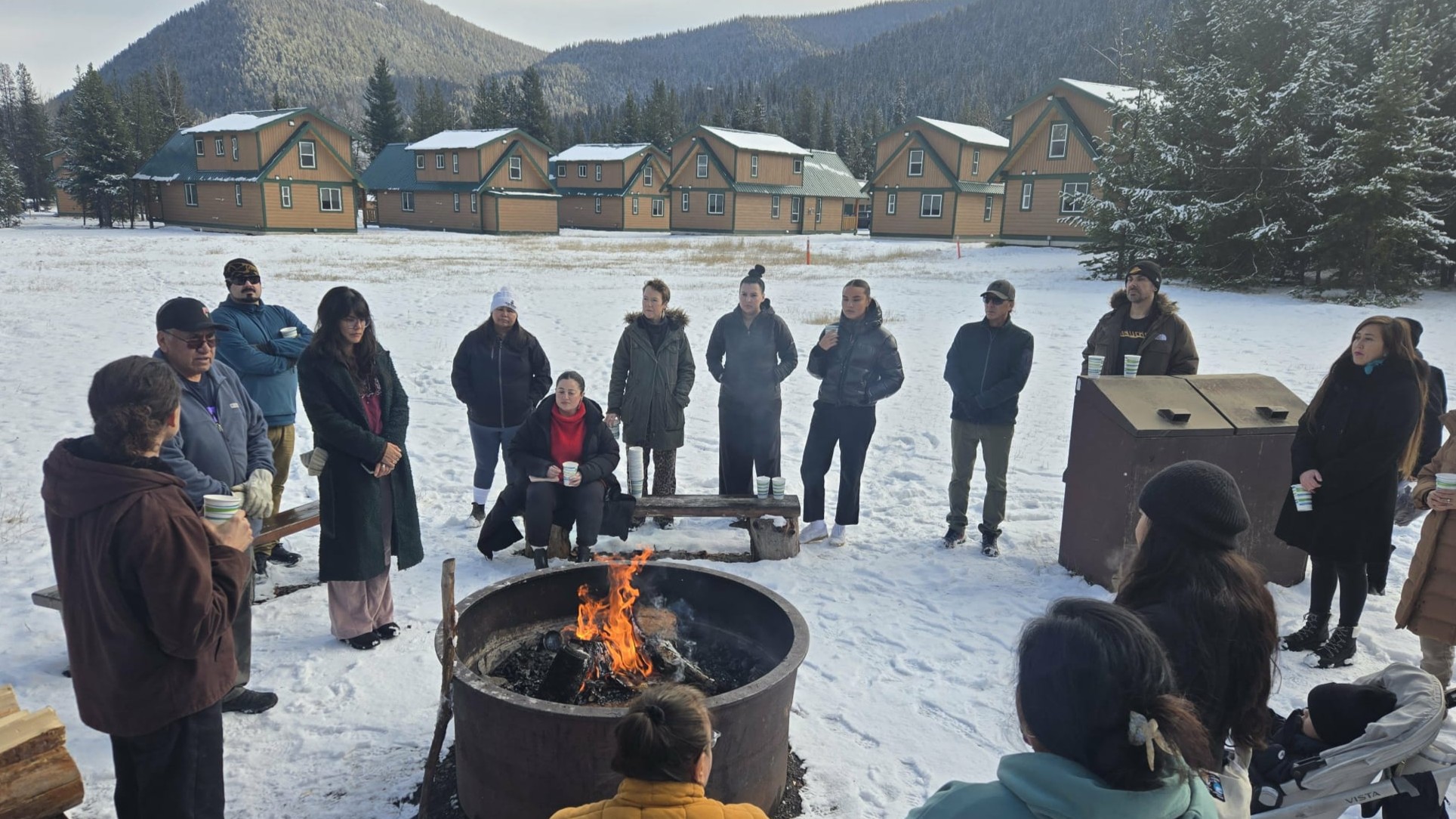
In November we hosted our first retreat of the year with our largest and most diverse Co-Learning cohort yet. All 23 participants were fully engaged in Indigenous Law in Story at Manning Park Resort, located in the North Cascade Mountains in an area that encompasses the headwaters of the Similkameen and Tulameen Rivers. The area is known as saʕtikn in the nsyilxcən language, and connects several Indigenous peoples, including the sməlqmíx / syílx, Nlaka’pamux, upper Skagit and Stó:lō.
Many enlightening conversations and laughs were had around the fire, sharing ways of knowing and being in the world from our respective backgrounds and cultures. Our feet may have been cold, but our hearts were warm up in the snowy mountains; in a winter wonderland where we felt welcomed to learn from the stories that are often told only in the colder months.
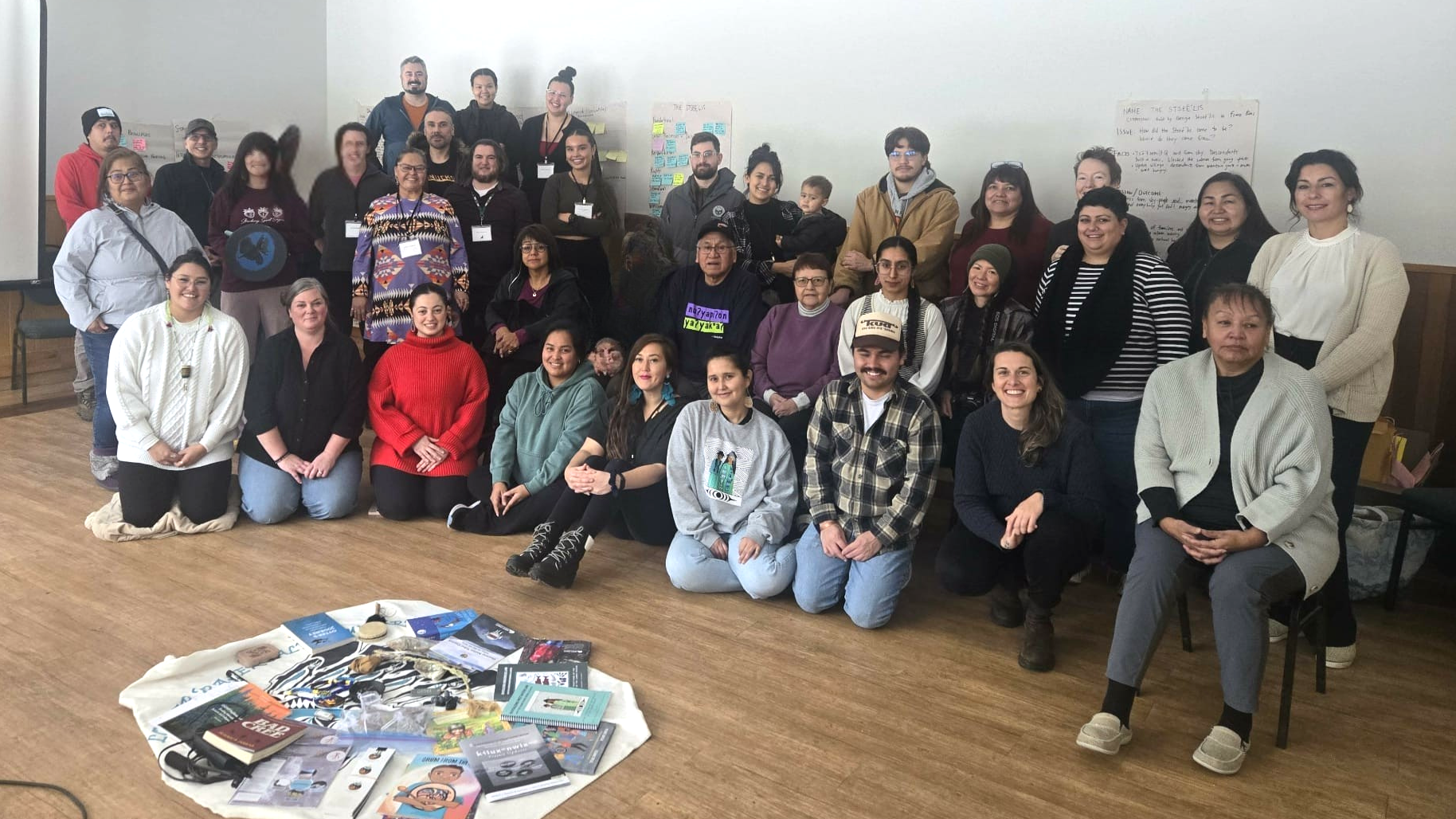
Photo: Katłıà Lafferty
sməlqmíx Elder and knowledge carrier Robert J. Edward reminded us that Indigenous stories are not to be molded and shaped to fit into the common law agenda; rather the common law should bend to fit into Indigenous stories.
Knowledge carrier and member of the Okanagan Nation Alliance and the upper mid Columbia River system, Lauren Terbasket, shared the work she and many others from the community have been doing around water rights. Lauren stated that water has the right to be clean, to flow freely and to be distributed.
She shared that punitive law often does not work to deter bad actors. Corporations making decisions that negatively impact the environment are often not held to account fairly through punitive law because large corporations are typically only faced with small fines, which can easily be paid without any damage to business-as-usual operations or any real learning, but it is in Indigenous story and Indigenous law where real change can occur, because Indigenous stories and laws are informative and thus transformative. Story work helps us understand and see a bigger picture that we are all a part of, which has the power to change hearts and minds.
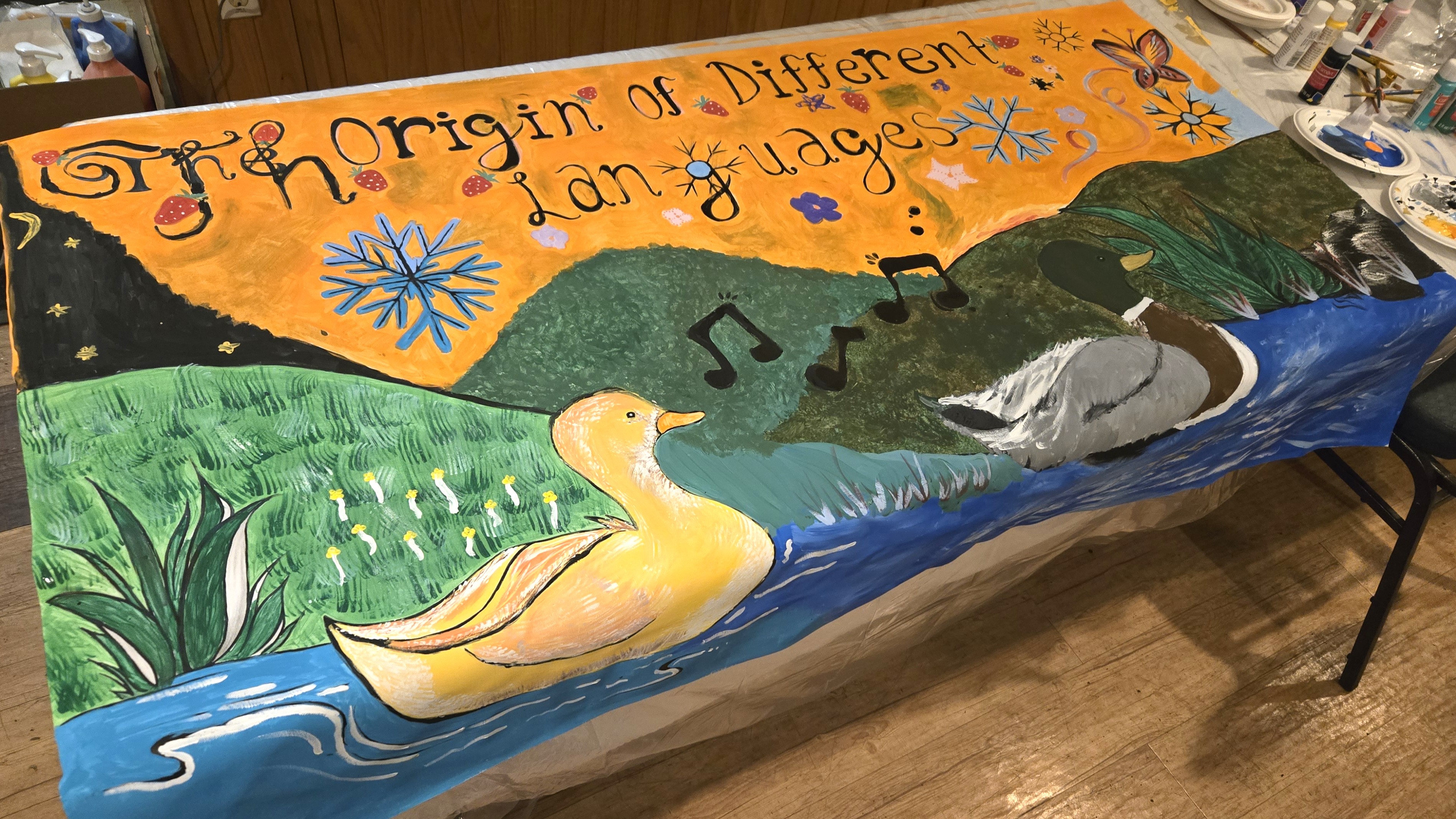
Mural of Sylix story The Origin of Different Languages painted by various retreat attendees / Design: Aliviya Coe
Participants were reminded that the messages in Indigenous stories may seem elementary, but spending time and listening and sharing stories through multiple perspectives can give us insight into new ways of understanding, both literal and figuratively. Indigenous stories are layered and complex. They carry nuanced inferences depending on the listener and where they are at in their journey in life.
Most importantly, as a collective we discussed the importance of ensuring that not just anyone is able to access or interpret Indigenous stories for their own prerogative, and that the ways of knowing that are deduced from the messages and teachings must be guided with good intentions by the nations who are the guardians of the story where learners must follow proper protocol.
We are looking forward to our second retreat Indigenous Law in Dialogue in February!
Top photo: Manning Park Resort, located in the North Cascade Mountains in an area that encompasses the headwaters of the Similkameen and Tulameen Rivers / Katłıà Lafferty