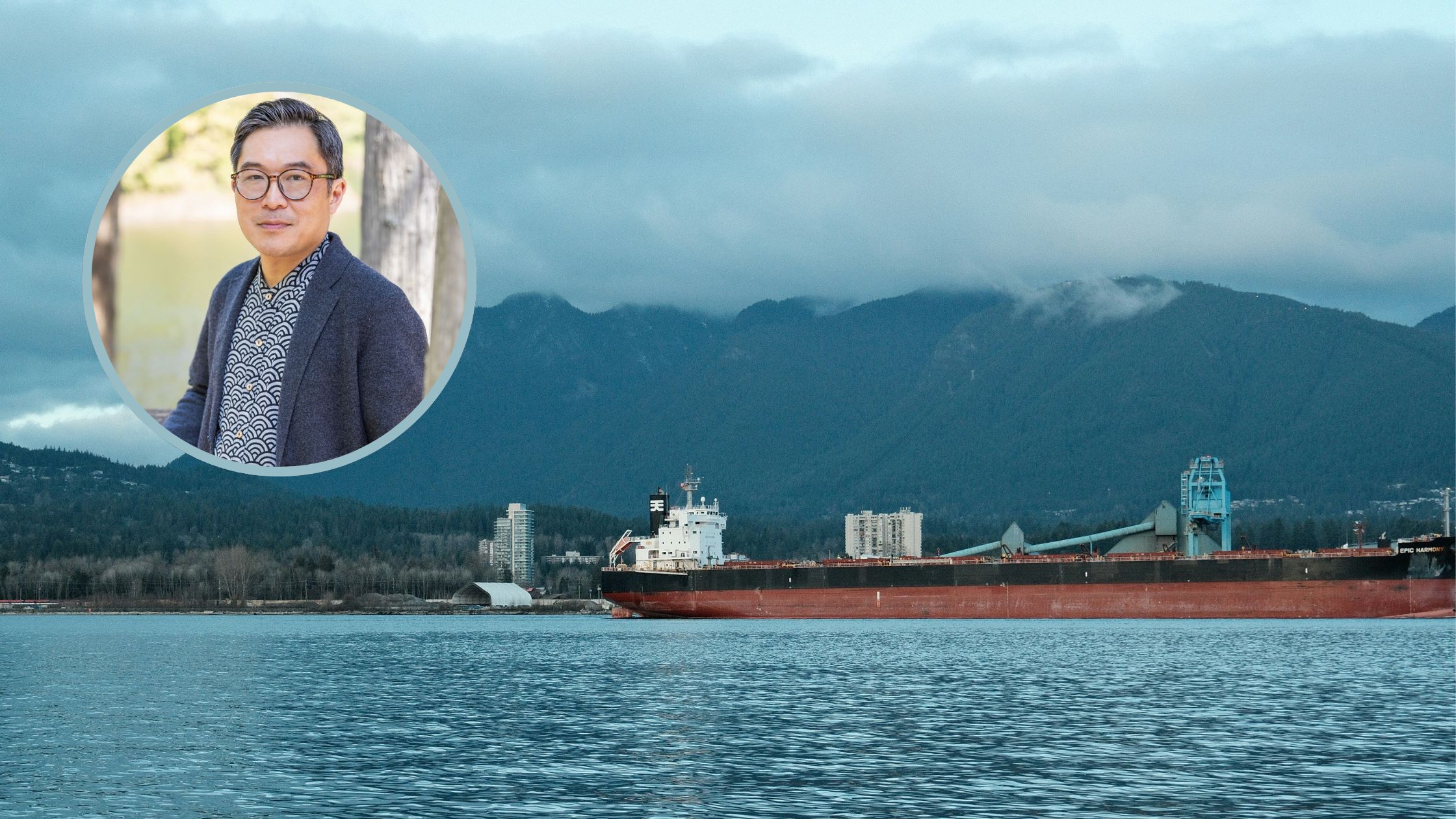
For almost 20 years, West Coast has been working to prevent the expansion of oil pipelines and infrastructure projects that endanger BC’s watersheds, marine and terrestrial ecosystems, our climate, and the human communities that rely on them.
We chatted with Eugene Kung, Staff Lawyer on West Coast’s Tar Sands, Pipelines and Tankers team, about this work’s long history, priorities and latest challenges.
Eugene, you’ve been in this fight from near the beginning. Can you share a little bit of the history, what motivates you to do this work, and what’s led us to the point we’re at today?
I joined West Coast in 2014 to work with the Tar Sands, Pipelines and Tankers team, and to lead West Coast’s Trans Mountain Expansion (TMX) opposition. At that time, the Enbridge Northern Gateway campaign was in full force, and the emergence of Indigenous law responses to the pipeline proposal was inspiring.
I worked with Tsleil-Waututh Nation on Indigenous law revitalization and application, resulting in Tsleil-Waututh's assessment of the Trans Mountain Expansion proposal – one of the first assessments of a major industrial project by a First Nation under their own laws. We supported the Nation in Canadian legal processes and we worked to build a movement with other people, organizations, companies and governments who are concerned about the climate crisis and supportive of Indigenous reconciliation. It was a really exciting time.
After the government bailed out TMX in 2018, the pipeline was completed in 2024 – years behind schedule, and more than five times over budget. The $40 billion in loans from Canadian taxpayers will never be paid back in full, and represents a massive subsidy to the oil and gas sector.
In the fall of 2025, Ottawa and Alberta signed a Memorandum of Understanding supporting a new oil pipeline to Canada’s north coast. What are the big concerns with that project?
The newly proposed oil pipeline and tanker project is a big concern because it involves a federal government and a province making decisions for another province. Both BC and impacted First Nations should have a say in what happens to the coast.
The BC government and Coastal First Nations have been clear about their opposition to the idea of a new oil pipeline and tankers on the north coast of BC, where the Oil Tanker Moratorium Act currently protects the region from the threat of major oil spills.
The reality is, we don’t need another oil pipeline – TMX isn’t even full. Projections by multiple energy agencies do not support the need for another pipeline, and going down this road locks us into more oil expansion and more climate chaos.
What’s the latest in your work on the Trans Mountain Expansion?
To answer this question, I have to get into something called “tolls.” Tolls are what the oil companies pay to move resources through the pipeline and are regulated by the Canada Energy Regulator (CER). The TMX pipeline cost $34 billion to build, and the tolls are what are supposed to recoup that cost. However, because of TMX’s unique situation, their proposed tolls would recover less than half of the $35 billion construction cost, leaving up to $20 billion for the owners (ie. Canadian taxpayers) to swallow as losses. The oil companies are pushing for the tolls to be even lower, which means we’ll lose even more.
Last year, Trans Mountain’s toll hearing was paused so it could renegotiate its tolls with oil companies, and they are due to provide an update on July 13, 2026 on whether these companies will pay their fair share.
These processes are convoluted and challenging for the layperson to understand. When a project is declared “in the national interest” our job as lawyers is to sift through the details and make sure regulations are followed. We can’t support costly, unnecessary infrastructure that threatens the environment and our communities.
So, the Canadian public is being asked to hand a $20 billion subsidy to oil companies who are making record profits. And now a new pipeline is being proposed when we haven’t even filled the last one. What’s West Coast doing on this?
We are working in coalition with other organizations and First Nations to make sure this pipeline doesn’t happen. TMX should serve as a warning sign for future pipelines such as the new proposed Pacific coast pipeline (which, FYI, just missed its first set of negotiation deadlines). The next major deadline is July 1 when they are supposed to put forward a proposal, but right now they don’t have any interested private investors – a requirement for this pipeline. We’ll be watching things closely and will be ready to defend our marine and terrestrial ecosystems and communities. Stay tuned for more updates soon!
What you can do
You can help by contacting your local MP and the Minister of Transport to demand that they stand up for the Oil Tanker Moratorium Act and reject a proposed pipeline and tanker project to the coast.
West Coast Environmental Law Program Spotlight Series:
- Strong Canadian Environmental Laws with Anna Johnston
- Liveable Sustainable Communities with Deborah Carlson
- Sue Big Oil with Andrew Gage
- Revitalizing Indigenous Law for Land, Air and Water (RELAW) with Katłıà Lafferty and Rayanna Seymour-Hourie
- Community Outreach with Tra Mi Do Le
- Marine Protection with Georgia Lloyd-Smith
- Pipelines and Tankers with Eugene Kung